Kenya stands at a pivotal moment in its economic journey, a moment that will determine whether the nation owns its future or remains trapped in dependency. On the surface, the country’s economy appears vibrant. Growth figures are celebrated, new factories are announced, and jobs are created. Yet beneath this apparent progress lies a deeper truth: Kenya has built much of its economy on fragile foundations. It exports raw materials at low prices, imports finished goods at high cost, and relies heavily on foreign-owned factories and investors to fill the gaps. This cycle provides the illusion of development but entrenches a model that drains wealth outward while leaving Kenyans with little more than low-paying and insecure jobs.
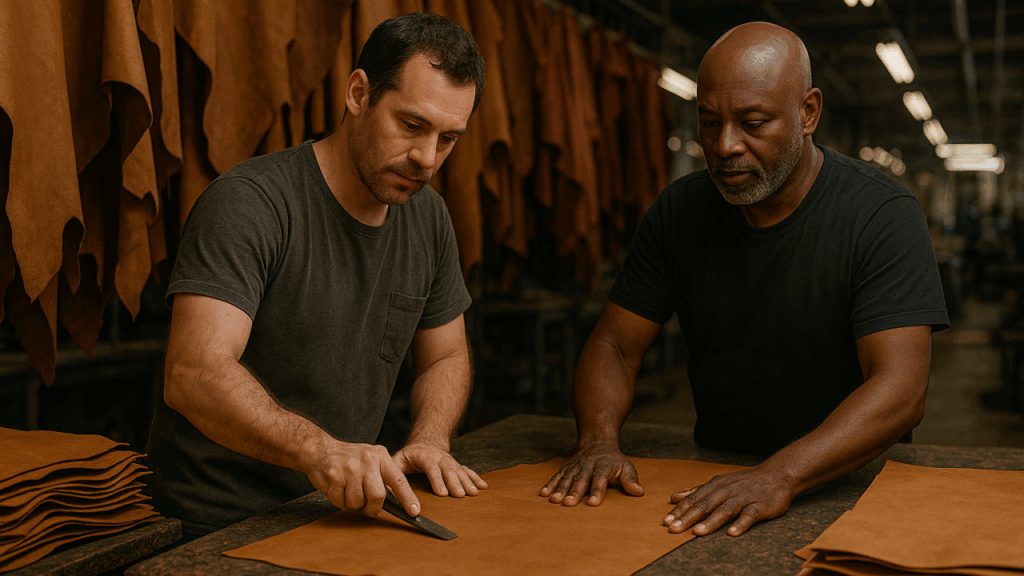
The pattern is not new. Kenya exports hides and skins, only to import expensive shoes. It produces abundant fruit, yet much of the juice on supermarket shelves comes from South Africa or Egypt. At first glance, this appears to be participation in global trade. But when the pattern is mapped clearly, the cycle becomes evident: raw materials leave the country cheaply, finished goods return expensively, and government policies then focus on attracting foreign investors to bridge the gap.
On paper, this model looks like progress. Foreign investors bring capital, build factories, and create jobs. Yet in practice, the benefits are shallow. Most jobs are at the lower end of the hierarchy, requiring minimal skill and providing minimal security. The factories are largely foreign-owned, meaning that the real value and profits flow abroad. Worse still, the very ecosystems that should form around local anchor companies, suppliers, processors, innovators, and distributors never take root. Instead of nurturing entire networks of Kenyan firms, the country fosters dependency on ecosystems tied to foreign markets.
This is why Kenya has frequently confused job creation with wealth creation. Prosperity is not built by counting how many jobs exist, but by asking what kinds of jobs they are, who owns the machines, who captures the margins, and who ultimately controls the future. For now, too many of Kenya’s jobs are designed to sustain subsistence, not to lift people into lasting prosperity.
The danger lies not only in dependency but also in delay. Timing is everything in building industries. The first companies to establish themselves in a sector do far more than process materials. They establish the game’s rules, outline supply chains, secure contracts, and safeguard the margins that generate wealth. Around them, entire ecosystems take shape. When Kenya hesitates to build its own anchors, it leaves room for foreign firms to dominate. And once they do, they rarely let go. With their scale, capital, and political influence, they construct ecosystems that local businesses find nearly impossible to penetrate. What looks like hesitation today quickly becomes exclusion tomorrow.
The lesson is already evident in sectors where Kenya has natural advantages. Rare earths and gemstones leave the mines raw, only to return as polished stones or refined inputs of far greater value. IndIndigenous plants with immense pharmaceutical potential are exported in raw form, while profitable nutraceutical and biomedical industries are developed overseas.aCoffee, macadamia nuts, and avocados are exported in large quantities from Kenya, while the actual profits are generated from branded teas, packaged snacks, and oils that are owned by other companies.en in the realm of digital and data infrastructure, which is the foundation of the future global economy, systems that will shape markets and power industries are being developed elsewhere, leaving Kenya reliant on platforms that it does not control.
The The conclusion is clear: the first investor will have the longest-lasting influence.ery year Kenya delays, it does not simply fall behind; it loses an entire generation of ownership.
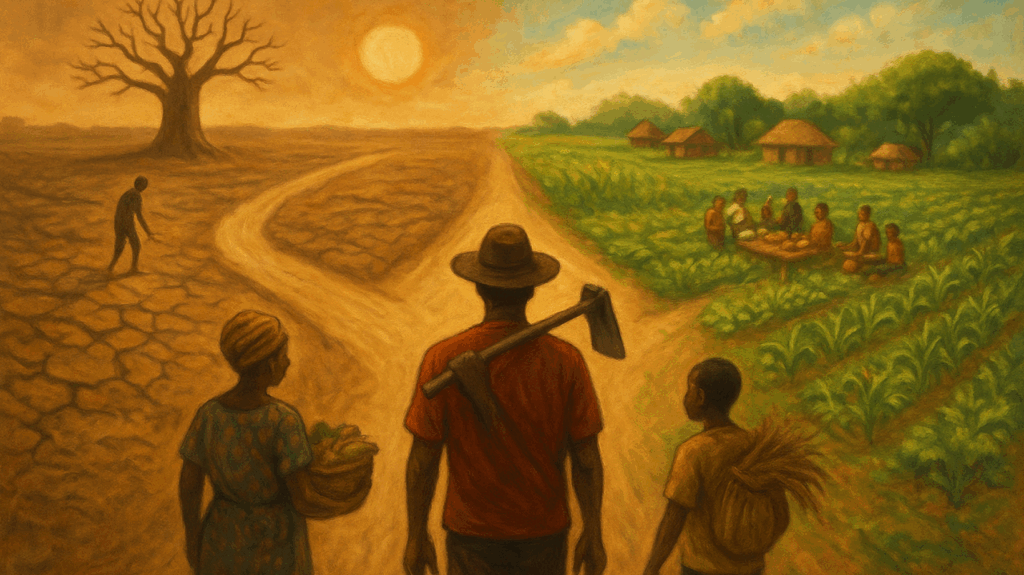
At At this crossroads, the country faces two paths. The first, the road it is already on, is one of dependency. Raw materials will continue to be exported from the country at low prices. Foreign investors will dominate the higher-value stages of production. Low-margin activities will continue to constrain local entrepreneurs, and jobs will persist at the lowest levels of the chain. Incomes will stagnate, and ownership will continue to slip away, even as policymakers insist that Kenya is integrating into global markets.
The second path remains open, but only if action is taken urgently. It is the path of investing in value addition, building Kenyan-owned anchor companies, and creating local ecosystems of suppliers, innovators, and distributors. It is the path of optimising value chains so that productivity increases at every stage, ensuring that wealth circulates within Kenya rather than leaking outward. On this path, jobs are not merely created but upgraded. They become better paid, more secure, and more meaningful, as workers build skills and ownership alongside wages.
This choice is not abstract. Every policy decision, every trade agreement, and every investment incentive pushes Kenya toward one path or the other. There is no middle ground. Either the nation doubles down on its model of cheap labour and foreign ownership, or it commits to building the productive systems that guarantee sovereignty over its own future.
That is why the questions of value addition and productivity cannot remain side notes in donor reports or technical appendices in policy papers. They are not simply matters of economics. They are matters of sovereignty and security. In the end, the principle is simple: whoever owns the machines owns the margins, and whoever owns the margins owns the future.
Kenya will remain trapped in dependency if it does not make immediate investments in developing its own productive economy. Factories will rise on Kenyan soil, but they will not belong to Kenyans. Jobs will exist, but they will not lift workers into lasting prosperity. Growth will be measured, but wealth will flow elsewhere. To confuse job creation with economic transformation is to mistake the shadow for the substance. Jobs should be the result of productivity and ownership, not the starting point.
Kenya’s future will not be lost in one dramatic collapse. It will slip away quietly, industry by industry, decision by decision, unless action is taken now. The question is not whether jobs will exist or factories will be built. They will. The real question is, who will own them? If Kenya delays, ownership will belong to others. If it acts, ownership can be claimed at home. And the pursuit of ownership here does not mean nationalism. It means fair distribution of wealth. The goal is not to isolate Kenya from the global economy but to ensure that the benefits of its natural resources, industries, and innovation are shared equitably among its people. Ownership in this sense is about empowering communities, fostering inclusive growth, and securing the foundation for a more just and resilient society.
Every year of hesitation costs the country a generation of ownership. Every decision is a choice between sovereignty and dependency. The time has come to stop renting the future and to start building it. Only by investing in value addition, optimising value chains, and anchoring them in local ownership can Kenya secure prosperity for its people and ensure that the wealth of the land translates into the wealth of the nation.
Co-authored with Ambassador Professor Bitange Ndemo as part of a series on Value Chain Productivity and Innovation