Over the past few days, I spoke with three different entrepreneurs — each in a different sector, working on very different things. But they were all navigating that in-between space where you’re not quite sure if you should keep pushing in the direction you’ve been going, or whether it might be time to change course.
It then struck me how often this happens, especially when you’re working on something new: you’re still figuring things out, but at the same time the world expects you to already have all the answers. You’re shaping the work as you go, but you’re expected to explain it clearly, confidently and with supporting data — even when there is none!
And that gap between what you know internally and what you’re expected to show externally is where a lot of compromises begin. Because sometimes the pressure to make your idea safe — fundable, marketable, easy to understand — pulls you away from the thing you actually set out to build…
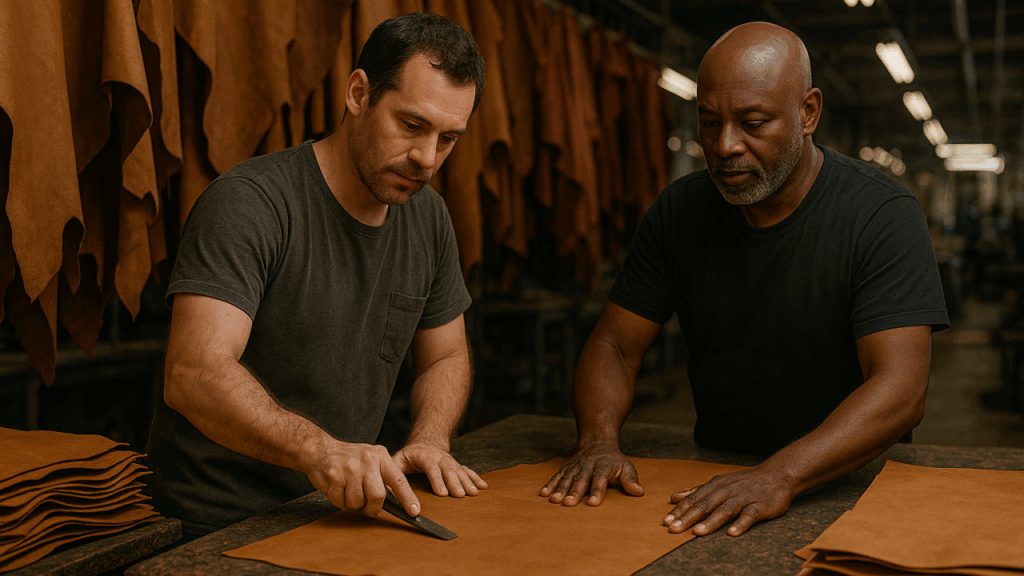
One of the conversations I had was with an entrepreneur working with women’s weaving groups. Not to make the usual baskets, but to design and produce high-quality bags for men. His thinking is simple: why should these groups stay stuck in small-scale craft production when the same skills and materials can be used to create something bolder, more commercial, and more profitable?
It’s not just a product idea but a shift in how the work is perceived and a move away from subsistence towards real market ambition. It makes complete sense and is well thought through, rooted in an existing value chain, with a clear sense of what’s possible if things are done differently.
But what’s obvious to the founder may be less obvious to a potential funder — especially one who isn’t backing potential, but looking for proof.
So when it was time to pitch and he was asked to back up his idea with data, things got complicated. There was no solid data on men’s bags made from sisal. But there was a lot of data — and funding logic — around women’s groups making baskets. So under pressure, he changed his pitch to make it all about the familiar narrative of women’s groups and sustainability again.
Not because he changed his mind, but because he needed the idea to be “safe — fundable, marketable, easy to explain”. And everyone understands the language of “women’s groups”, “community”, “sustainability”. It ticked all the right boxes. High quality bags for men didn’t (at least not yet).
In contrast, another entrepreneur I’ve worked with takes a very different route: he doesn’t walk into the unknown at all. He constantly scans for signals — where his customers want him to go, where the funders seem more comfortable — and then he pivots toward that.
From the outside, it looks responsive, adaptable and “in-touch”.
But up close, the path he’s walking seems unclear. He seems to be just moving. There’s no consistency, no real direction.
He’s not wrestling with the tension between vision versus validation, instead he is more a habit of letting “what the data says” decide where to go next. As if the numbers can provide certainty. As if you can avoid the discomfort of not knowing by staying close to whatever already looks like it’s working.
But data — as useful as it is — tends to protect the past. It reflects what’s expected, what’s already been proven. Vision tries to build what hasn’t been done yet. And if you only follow the signals, you rarely end up somewhere new.
The third entrepreneur I spoke to isn’t drifting — he knows exactly what he’s trying to build. The vision is clear. It hasn’t changed. But progress has been slow and validation has been hard to come by.
So now he’s stuck in that difficult middle stretch: where you’re not lost, but you’re not sure if you’re making progress — or just being stubborn.
He doesn’t need a new idea or new direction. He just needs confirmation that the one he’s building is still worth it. But the signals aren’t clear. The traction isn’t obvious. And when people ask what’s working, he finds himself wondering: What counts as working?
This is the tension that rarely gets spoken about — the one that comes not from having no direction, but from holding onto your direction while everything around you asks for proof.
It’s not about faking anything but about not giving up too early… and that’s one of the hardest places to be!
Then when watching a romantic movie on the unpredictability of love, the leading lady said:
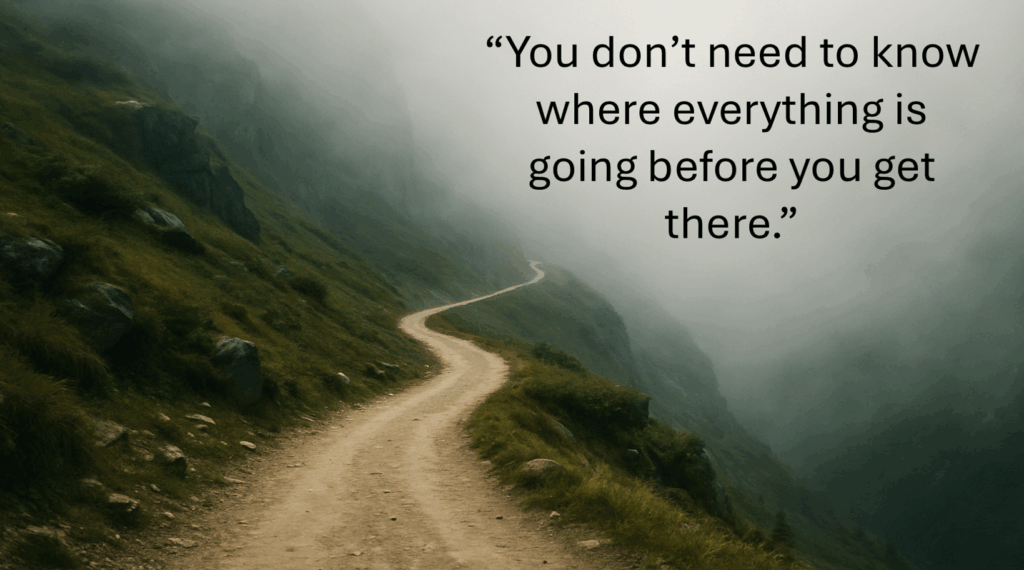
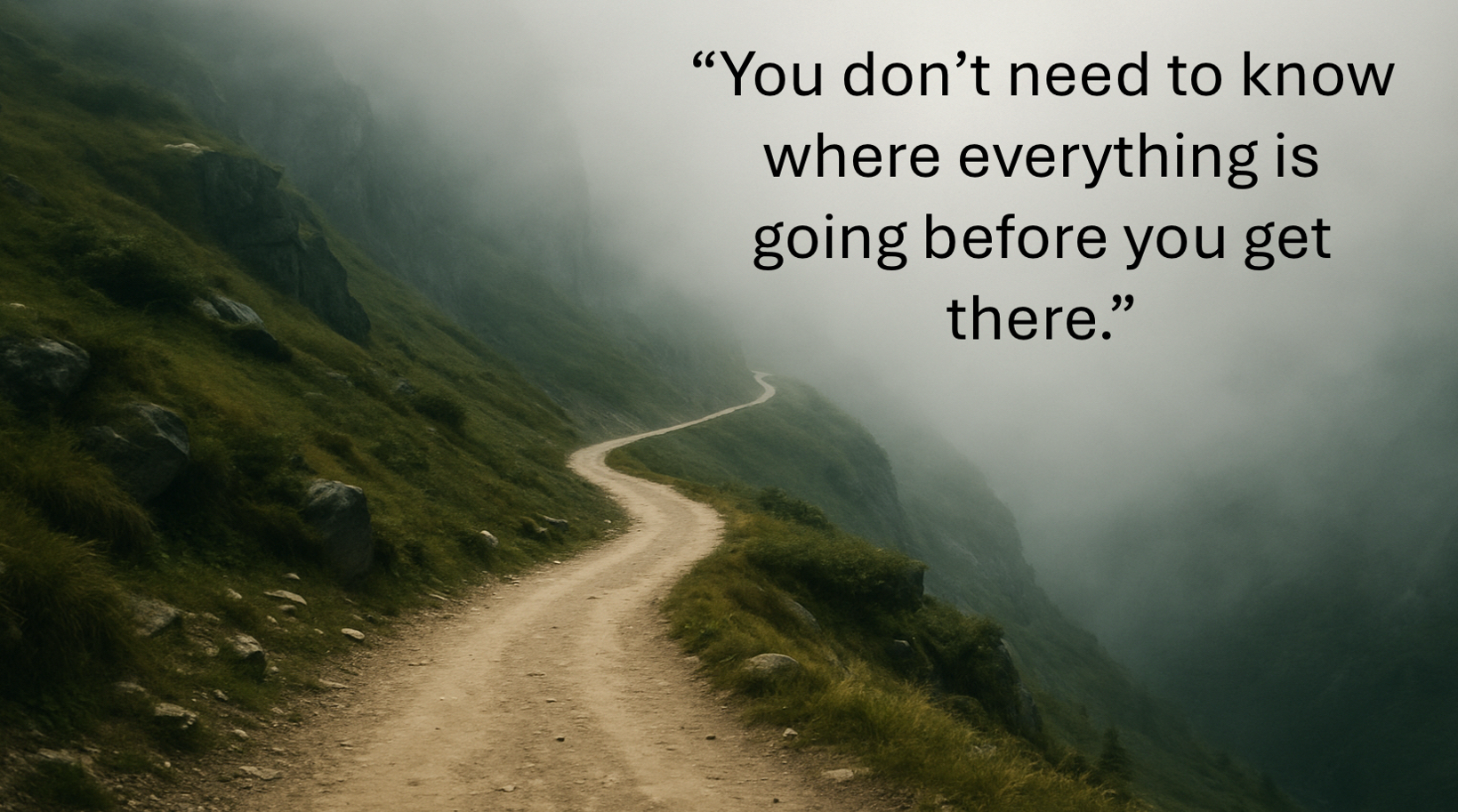
“You don’t need to know where everything is going before you get there.”
It’s a simple sentence in a completely different context, but it stuck.
Because often also as entrepreneurs you do know what you’re trying to build — just not how it will take shape yet, or when it will finally look “valid.”
And that’s where that outside pressure creeps in. Not necessarily to fake it, but to tone it down. To make it simpler, clearer, easier to explain. More fundable. More data-driven. Less uncertain.
But… not knowing is part of the work!
Especially when you’re building something that doesn’t exist yet…
That sentence also made me think about our own projects — especially how we’ve been building our value chain programs.
We’re not copying already existing models and narratives. We’re not also chasing where the funding currently is. We have a clear long-term goal. But the path toward it isn’t fully mapped. We’re designing as we go — based on our experience and know-how, but also on what we’re learning, and what feels worth fighting and striving for.
We keep going not because it all makes sense yet — but because the vision is strong enough to keep walking toward.
Not all progress looks like growth charts or user numbers.
Sometimes progress looks like building real capability — both in yourself or in others; Sometimes it’s as simple as becoming more confident, more consistent; Sometimes it’s about finding the right collaborators and knowing who to work with and who not.
It might not look too impressive from the outside. But I believe it’s the kind of progress that makes the next steps possible.
The real risk isn’t not knowing, but not having anything worth walking toward.
As Oscar Wilde once said: “Make your dreams big enough so you don’t lose sight of them.”
You don’t need to know where everything is going before you get there. But you do need to know why you’re still walking.
Because without having a vision worth walking toward — even the clearest, most data-backed path can leave you feeling lost. But with it — even in the fog, you can count on each step moving you forward.