A few days ago, I was co-writing an article about the difference between supply chains and value chains. What started as a relatively clear topic drawn from years of experience, suddenly became something more complex when we realized how uniform the concepts had become in everyday language. Everyone thinks they know what a value chain is. But when you dig deeper, what they often mean is logistics — good, solid operational coordination — but not value chain thinking. Not the kind that redesigns where and how value is created across an entire system.
And then it struck me: of course they think they know — as that’s what the brain is trained to do: when presented with a new idea, our minds instinctively try to map it to what we already know. We rarely stop to ask: Wait — what if this isn’t the same thing at all?
That thought has been growing in the back of my mind ever since. And it’s connected to something I’ve been trying to make sense of for a while — why most innovations often seem so limited to me, especially in places where creativity and entrepreneurial hustle exist in abundance.
Exposure Shapes Imagination — But Only If You’re Willing to Reframe
One explanation I keep coming back to is exposure. In places like the US or Europe, we grow up surrounded by working systems. We experience digital tools, automated supply chains, user-centered service models—not as concepts, but as the every day normal. Over time, that stretches our mental map. It expands our sense of what’s possible.
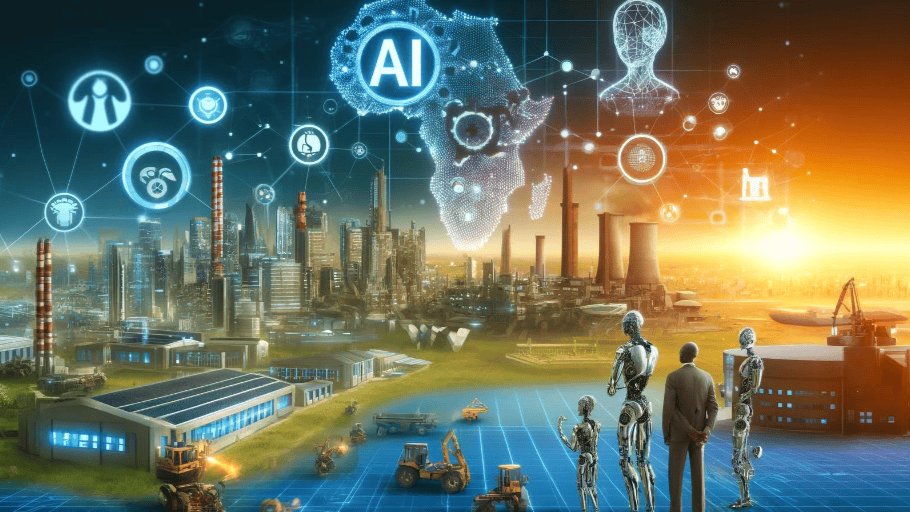
In much of Africa, by contrast, what most people are exposed to is constraint. Broken infrastructure. Informal systems. Patchwork solutions. So the “imaginable” — in business, in systems, in innovation — often remains within those limits. People innovate around constraints — they create small but creative workarounds. Hence you see innovation everywhere—at least on the surface.
But here’s for me where the paradox lies: Africa is full of ingenuity and resourcefulness and has all the ingredients of innovation. The same is true for highly developed corporate environments.
So why don’t we see more systemic innovation?
Again, I think it’s not that people don’t have ideas. It’s that their imagination is shaped by what they know, what’s familiar. And the familiar, ironically, can be one of the biggest obstacles to change.
🔹🔹🔹
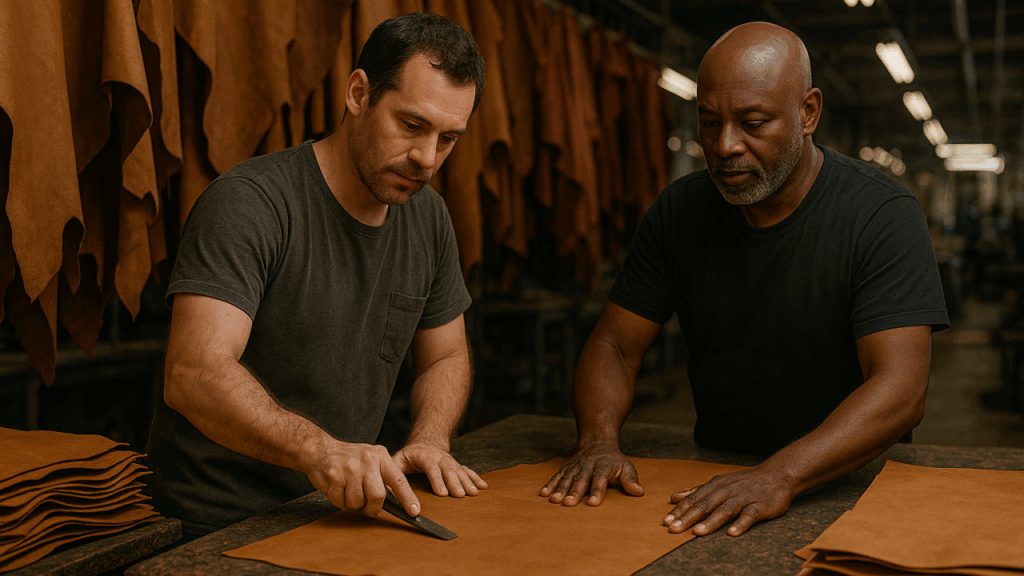
Years ago, when I worked at Philips, I ran a program to train managers on value-based pricing. As part of the learning, they had to apply the concepts to executive-led, real-life projects. Out of eight teams, six were assigned to departments outside their own. The other two stayed close to home—working on problems they already knew well.
The outcome? The “outsider” teams did far better. They were bolder, more curious, less constrained by what had been tried before. They saw opportunities others hadn’t, asked naive but essential questions, and created solutions no one had thought to try.
The “insider” teams struggled. Not because they lacked knowledge or experience—but because they had too much of it. They kept hitting the same walls: we already tried this before, that won’t work here, this is how things are done. Their deep familiarity, instead of unlocking new solutions, trapped them inside old ones.
It wasn’t because they lacked skill. It was because they were too close. They had things to defend: past decisions, current assumptions, maybe even their pride. They had emotional attachment.
And that’s when I thought of another contradiction.
Emotional Attachment: The Hidden Constraint
In entrepreneurship, we’re taught to care deeply. Be passionate. Fight for your idea. Believe when no one else does. And that’s real: emotional attachment to the mission — to the problem you’re solving, the people you serve — is necessary. It gives you stamina, conviction, a reason to keep going when things fall apart.
But emotional attachment to the solution — to your original idea, your chosen model, your favourite product feature — that can quietly become a trap.
It can blind you to finding better answers. It can make you defensive when challenged. It can lead you to over-invest in a dead end because letting go feels like failure.
So which is it? Is emotional attachment good or bad?
The answer, I think, is that it depends where the attachment sits.
Be deeply committed to the problem. But stay flexible—almost agnostic—about the solution.
It’s a subtle distinction, but a critical one. The best innovators (whether startups or corporate) I’ve met and worked with aren’t married to their first idea. They’re obsessed with understanding the eco-system. They listen well, they adapt where necessary. They’re willing to throw away their prototype and even years of work if they discover a better path—even if it means starting over.
And ironically, the people most resistant to change are often the ones who “know” the most.
Familiarity Can Be the Enemy of Innovation
This brings me back to the article on supply chain vs value chain— and how often we mistake familiarity for understanding. People don’t miss out on innovation because they’re lazy or unimaginative. They miss out on it because they’ve already framed the problem a certain way — and unframing is not part of the thinking.
Familiarity creates confidence, but it also creates blind spots. That’s why I love to bring together people from different disciplines and let them see life from the other person’s perspective. When someone from agri studies how cold chains work in healthcare — how vaccines are kept viable through temperature-controlled logistics — they begin to see how the same principles could transform how we move fresh produce. When someone from outside a department takes on a pricing challenge, they don’t carry the weight of what’s already been tried.
Distance creates clarity. Proximity creates friction, nostalgia, defensiveness.
And so we end up with yet another contradiction:
We need experience to solve complex problems — but that same experience can make it harder to see them clearly.
Being at Peace With the Contradictions
Innovation isn’t just about exposure. We need exposure plus reflection, the humility to admit what we don’t know—even inside what we think we know best. And this is where reframing matters most. A deliberate decision to pause and ask:
- What assumptions are shaping the way I see this?
- What if that assumption isn’t true?
- What would someone completely outside this system do?
And for corporates and startups:
- Where in your organization has expertise become a constraint?
- When was the last time someone from outside your unit challenged your assumptions?
- Are your teams emotionally attached to the problem—or to the solution?
None of this is clean or easy. It’s full of contradiction.
- That experience can make you better—or make you blind.
- That passion can drive you—or trap you.
- That knowing too much can keep you from seeing what’s right in front of you.
- That innovation often begins not with more ideas, but with letting go.
I didn’t expect any of that to come out of co-writing an article on value chains. But maybe that’s the point.
Sometimes, the real insight isn’t in the content. It’s in what the process reveals.