DEVELOPING
VENTURES,
INDUSTRIES &
ECOSYSTEMS
Through Productivity, Technology and Value Creation
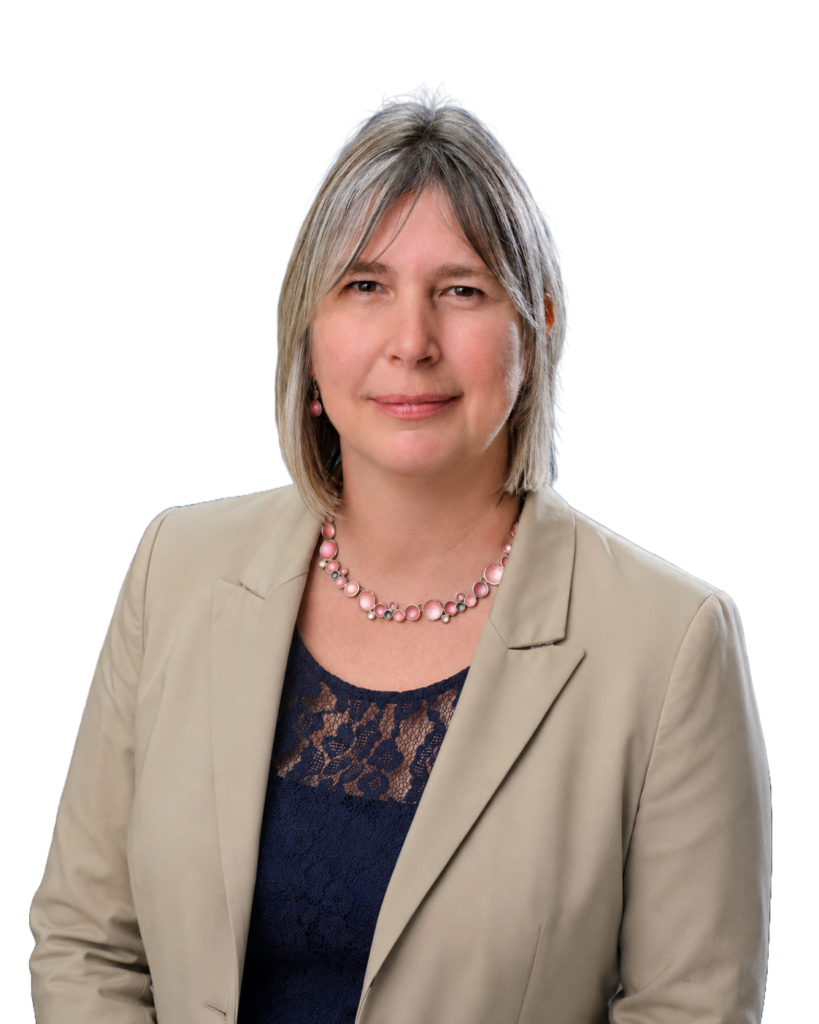
ABOUT ME…
The one great thing about getting older is that the pieces of the puzzle of life start fitting together. What once looked like a random career path suddenly starts to make sense.
Master’s in optimisation · AI experiments in Barcelona · Loving the arts in Paris · Business school at IMD · Executive years at Orange · Pricing battles at Philips · Working with teams across five continents · Rediscovering life in Nairobi · Building ventures and value chains · Designing learning experiences · Helping organisations and entrepreneurs discover their true potential
I love my life in Kenya, where I get to bring together my knowledge, experience and curiosity to work on challenges I genuinely care about. It turns out the puzzle pieces were not that random after all. They prepared me for what I do today: strengthening value chains, helping organisations become more productive, and supporting entrepreneurs to build sustainable businesses.
My thinking
My thinking has been shaped by moving between different worlds: technology and business, corporate environments and entrepreneurship, Europe and Africa, strategy and operations.
Over time, these experiences started forming connections. These themes reflect the ideas and experiences that continue to shape how I see the world.
AI & Decision Intelligence
The future of AI will not be shaped only by what machines can do, but by the choices humans make about where and how to apply them.
The challenge is not simply adopting smarter tools — it is building organisations that combine technology, data and human judgement to make better decisions.
—> In Progress…
Productivity & Operational Excellence
Performance is rarely transformed through one big idea. It emerges from understanding the hidden constraints, dependencies and decisions that shape how work gets done.
Productivity is not about doing more with less, but creating the conditions where people, processes and technology can create more value.
—> In Progress…
Innovation, Markets & Value
Too often, innovation conversations focus on ideas, technology and disruption while overlooking the harder questions: who needs this, why does it matter, and how can value be captured sustainably?
Creating the future is not only about inventing new possibilities — it is about understanding people, markets and the conditions that allow ideas to succeed.
—> In Progress…
Entrepreneurship & Business Growth
Entrepreneurship is often celebrated as the moment someone starts a business. But the real challenge begins afterwards: being an entrepreneur means constantly making choices: which customers to serve, what value to create, what to prioritise, and what to let go.
The question is not just how to start businesses, but how to build profitable and sustainable ones.
—> In Progress…
Value Chains & Economic Transformation
Many economic challenges are approached by looking at individual stakeholders. But value is created through systems: through relationships, dependencies and the ability of different players to strengthen each other.
The question is not only how organisations grow, but how entire industries evolve.
Random essays
Not all ideas fit neatly into a category.
These essays are a collection of observations, reflections and ideas that emerge from personal curiosity and experience.
Kenya’s Health Crisis Isn’t a Lack of Hospitals – It’s a Broken System
- Digital Transformation • Healthcare
Reimagining Kenyan Tourism: It Starts With Becoming a Tourist Yourself
- Tourism • Value Creation
Why rural electrification risks failing—unless we change what it’s designed to deliver.
- Energy & Mobility • Productivity
The Journey behind my Thinking
Looking back, I realise my career has never followed a straight line. What once seemed like unrelated experiences now feel like different pieces of the same puzzle. Each chapter introduced a new way of seeing the world…
1998
Turning problem solving into a way of thinking
MSc Operations Research, Econometrics & Actuarial Sciences
I have always been interested in solving complex problems: situations where many variables interact, where the answer is not obvious, and where better decisions emerge from understanding the underlying system. Studying optimisation taught me that the best solution is rarely the most obvious one. Improving one part of a system does not necessarily improve the whole; what appears optimal from one perspective can make the wider system perform worse.
1998
Being part of the second wave of AI
Software Development | Aplicaciones de Inteligencia Artificial, S.A.
Before AI became mainstream, I had the opportunity to develop algorithms for real-world decision-making. I moved to Barcelona without speaking Spanish and joined a boutique tech consultancy company at a time when startups were still a relatively new phenomenon in Europe.
I had no idea that AI would one day become one of the biggest technology conversations in the world. Without realising it, I was already working on the future.
2001
Learning to influence inside a multinational
Data Analytics | Orange Business Services
Moving to Paris brought me into the world of large multinational organisations: thousands of people, more than 200 countries, and as many different cultures and priorities. I learned that organisations rarely struggle because they lack information. They struggle when information does not lead to better decisions.
It was here that my intrapreneurial side started to emerge. I found myself bridging between teams, translating between different perspectives and combining information from different parts of the organisation to help people understand what was really happening and where action was needed.
2004
Heading Reporting & Analytics shaped my leadership style: I learned that creating change in organisations comes from bringing people along in your thinking.
Paris also became the city where I enjoyed the culture, arts, fine dining and good wine.
2009
When everything accelerated
MBA | IMD
The MBA was not simply about learning business. It was an intense one-year experience that pushed me beyond anything I had experienced before.
Together with highly driven people from different countries, industries and backgrounds, I experienced business under pressure: complex projects, impossible deadlines and group dynamics that tested everyone involved.
The biggest lesson was not a specific business concept, the exposure to different industries or even the diversity of perspectives. It was the constant challenge to look beyond my own assumptions that expanded my perception of what is possible — and gave me the confidence that you can achieve anything when you truly challenge yourself.
2010
Creating transformation at scale
Pricing | Philips Lighting
Philips Lighting was a great experience driving change at scale within the complexity of a global business.
Working across markets, functions and continents, I saw the complexity of bringing an organisation together around a common direction: from design and innovation to production, marketing and sales.
The experience strengthened something I had started learning at Orange: creating change is not only about developing the right approach. It requires influence, role models and use cases that help people see what is possible and bring them along.
While transforming the pricing organisation at Philips, I discovered something that later became a core part of my work: designing learning experiences and programmes that create those lightbulb moments where perspectives shift and people start thinking and acting differently.
Philips was also a very different personal chapter. Living in a penthouse-style apartment, with famous football players as neighbours, was certainly a different experience altogether.
2013
Leaving the corporate world behind
Starting eHub – The Entrepreneurs Hub
Moving to Kenya was not the biggest leap. I had already spent years running projects across Africa and had always been interested in emerging markets and new possibilities. The bigger shift was moving from building change inside organisations to building something of my own.
When I started speaking with founders and entrepreneurs, I saw a gap between the support available and what businesses needed to truly grow. There were many programmes focused on funding, incubation and mentorship, but less attention on the realities of building and scaling a sustainable business. That observation became the starting point for eHub | The Entrepreneurs Hub.
Living between Europe and Africa created another perspective. Being connected to two continents means constantly seeing similarities and differences: what works, what does not. It made me both insider and outsider — connected to both worlds, while always seeing them from a different perspective.
2016
When different experiences became an asset
Consulting, executive education & transformation programmes
Starting my own business gave me a different kind of freedom: the freedom to follow my curiosity. I finally had room to use all the different parts of myself. I found myself sticking my nose into all kinds of subjects and challenges from innovation and technology to business models and transformation, and bringing those different pieces together.
The joy was in creating. After years of applying my thinking within given structures, working with executives, corporates and institutions facing very different challenges gave me again the freedom to experiment: developing frameworks, designing learning experiences and finding new ways to help people understand complex topics, challenge assumptions and create those moments where something suddenly clicks.
2022
Bridging the technology gap
Starting CASBI – Centre for Applied Sciences & Business Innovation
When we started CASBI, the world around us was changing rapidly. Artificial intelligence and new technologies were opening possibilities that many organisations were only beginning to understand.
As in many developing markets, in Kenya the conversation was often still focused on building the foundations before embracing new technologies. But we saw a different opportunity: the ability to leapfrog, using technology to build new capabilities without being constrained by systems and structures developed decades ago elsewhere.
CASBI was created to help organisations understand these technologies, identify where they could create value and support the implementation and practical adoption.
2025
From technology adoption to economic transformation
When AI and new technologies gained increased attention, we noticed that the conversation had become heavily focused on tools such as ChatGPT and Claude, while the bigger opportunity was applying technology, analytics and operational thinking to improve productivity across organisations and value chains.
This explains our current focus on decision-making and productivity: how better decisions can be made, how processes can be improved, and how technology can strengthen operational performance.
It also changed the level at which we looked at transformation. Supporting individual businesses is important, but lasting economic transformation requires looking at sectors and value chains end-to-end: understanding how stakeholders connect, where value is created, where value is lost, and what capabilities are needed to improve the productivity and competitiveness of the system as a whole.