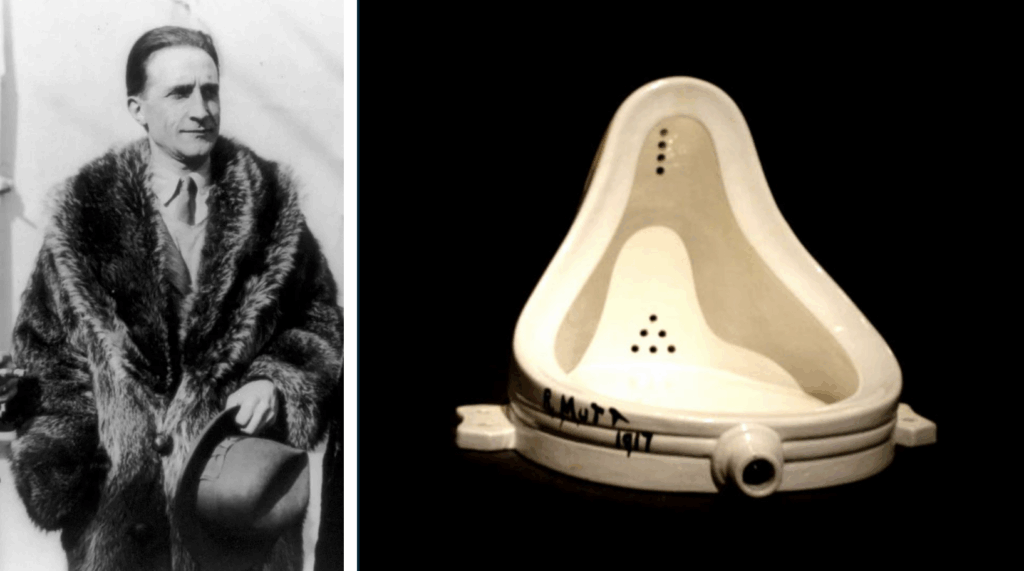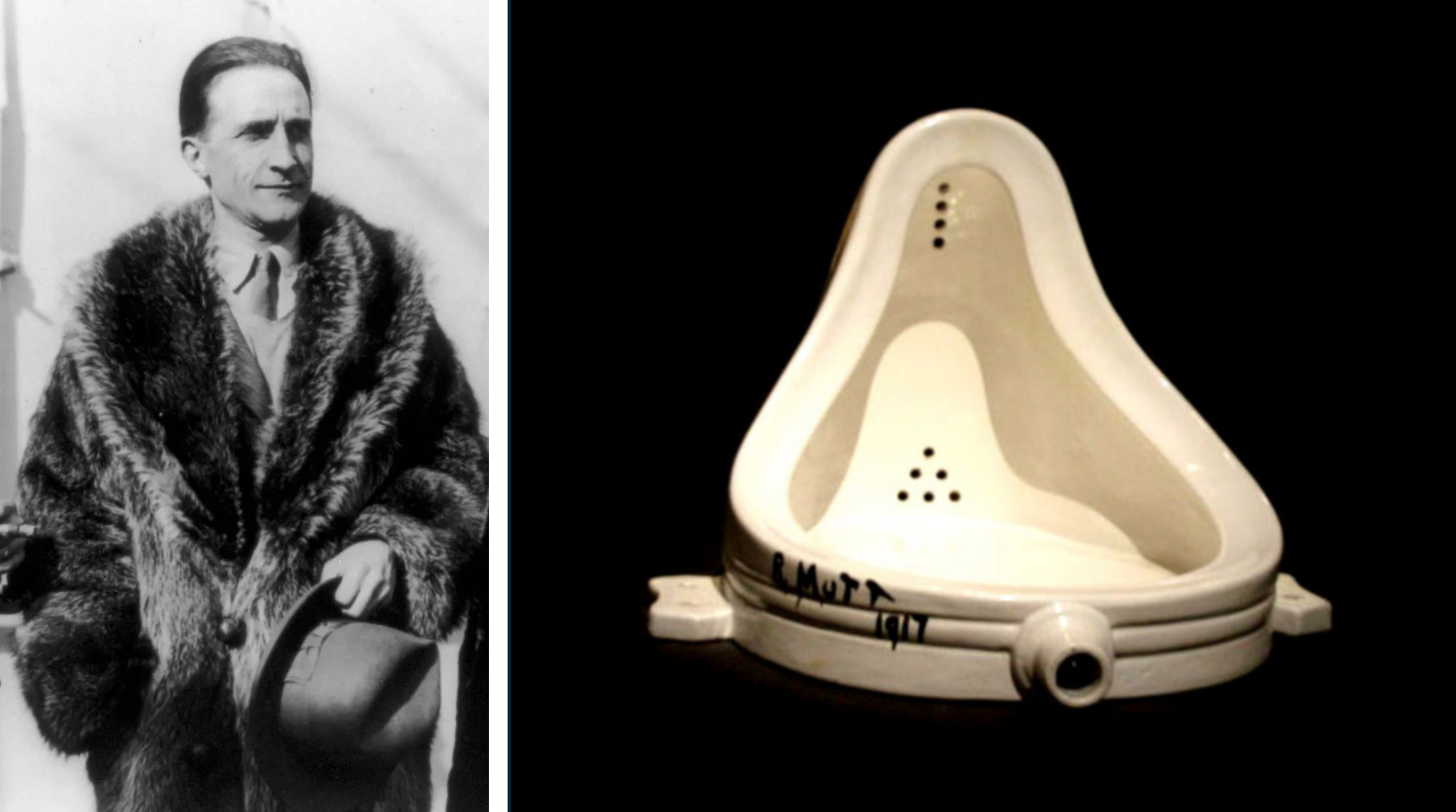
I’ve always been fascinated by Marcel Duchamp — not just as an artist, but as someone who understood how to challenge systems. When he submitted a porcelain urinal to an art exhibition in 1917, signed it “R. Mutt” (where armut means poverty in German) and called it Fountain, he wasn’t just provoking the art world. He was forcing a different kind of question: what do we value in the act of making? Is it the object, or the artist’s decision to submit it? Is it the skill, or the statement?
Lately I’ve been wondering how Duchamp might use AI — not to generate, but to expose how easily we’ve lowered the bar for what counts as creative work.
AI can now generate images, articles, product mockups, even ideas and strategies. And much of it is good! At least good enough that most people don’t question its relevance nor how it was made and where it originates from. The results look familiar — they sounds about right and hence they tend to land well.
And that’s exactly what makes me uneasy.
Because creativity, at least the kind I still believe in, was never just about the output. It should be about testing an idea. Questioning your own judgment. Deciding how far to push and when to pull back. It should not be just comfortable.
So when the uncomfortable disappears, or are skipped entirely, I start to wonder what we’re actually left with.
It’s easy to say that real creativity will survive. But then we should first be honest in defining what real creativity actually involves.
When Creativity Became Style Over Substance
The truth is, AI hasn’t disrupted some golden age of creative originality. Most of what we’ve called “creative” over the past decade was already drifting toward sameness.
Scroll through most branding, content, or product design today, and the patterns show: the sameness in colors, the way how sentences are constructed, the staccato rhythms. People got very good at figuring out what works to get attention, what converts, what feels just edgy enough to stand out without making anyone uncomfortable (yes, that seems a recurring theme for me in this article).
And that makes sense… when your work is constantly fed into algorithms for feedback — the views, likes — people learn to adjust. They learn to make what works and eventually, that becomes the goal.
But there’s a difference between making something work… and making something matter.
For me this is where I want to question our use of AI: most AI tools aren’t creating something new. AI didn’t invent the tendency to play it safe or repeat what performs well — it just absorbed it, made it faster and more visible. AI as I see it is not pushing the boundaries. It’s giving us back a more efficient version of what we’ve already said we want — and is amazing in doing so.
Intention Over Automation
Maybe the uncomfortable truth isn’t that AI can create. It’s that so much of what we’ve called creative was already easy to copy.
For a long time, we assumed creativity was safe from AI—too personal, too unpredictable, too tied to human instinct to ever be automated. But now that machines can generate headlines, images, even full strategies that land well with audiences, we’re being forced to ask: was that really creativity to begin with, or just a kind of pattern recognition following a script?
This shift isn’t just happening in the arts. It applies anywhere people are paid to have ideas, solve problems, shape meaning, or tell stories.
I keep coming back to Duchamp. When he submitted Fountain, he wasn’t just mocking the art world—he was showing how easily we confuse presentation with intention. He took something ordinary, placed it in a new context, and forced the art establishment to explain its own rules for what counted as creative work.
If we apply that same logic to AI, the question becomes: when something is made without any context, any sense of risk—what exactly are we looking at?
Because in a world where beauty and coherence are easy to produce, those things stop being markers of originality. What stands out is no longer the output, but the intent. Why this? Why now? What problem is the work trying to solve?
And more importantly: what is the maker willing to risk?
That’s still where the real boundary sits. Not between humans and machines, but between making something and standing behind it. Between production and purpose. Between what’s easy to generate and what’s still worth working through.
In fact, AI might be the best thing that’s happened to true creativity. It’s making it harder to pretend, and harder to confuse output with meaning.
What AI Will Never Feel
But even intention isn’t the whole story. A lot of what we call creativity also lives in the process of making — not just in the decisions we can explain, but in the ones we feel. The quiet signals. The instinctive shifts. The tension we register before we know why it matters.
These aren’t just intellectual choices. They’re physical, relational, often subconscious. And they shape the work just as much as the concept does.
Most conversations about AI and creativity focus on intelligence — how fast it can learn and how well it can generate. But creativity isn’t just about intellect. And it’s definitely not just about output.
A lot of the unconscious decisions we make when we’re creating something don’t come from facts. They come from something harder to pin down — a kind of physical knowing. You recognise when something’s off before you can explain why. You change direction because something doesn’t sit right. You pause (or like me, you procrastinate)— not because the idea is wrong, but because it’s not ready yet.
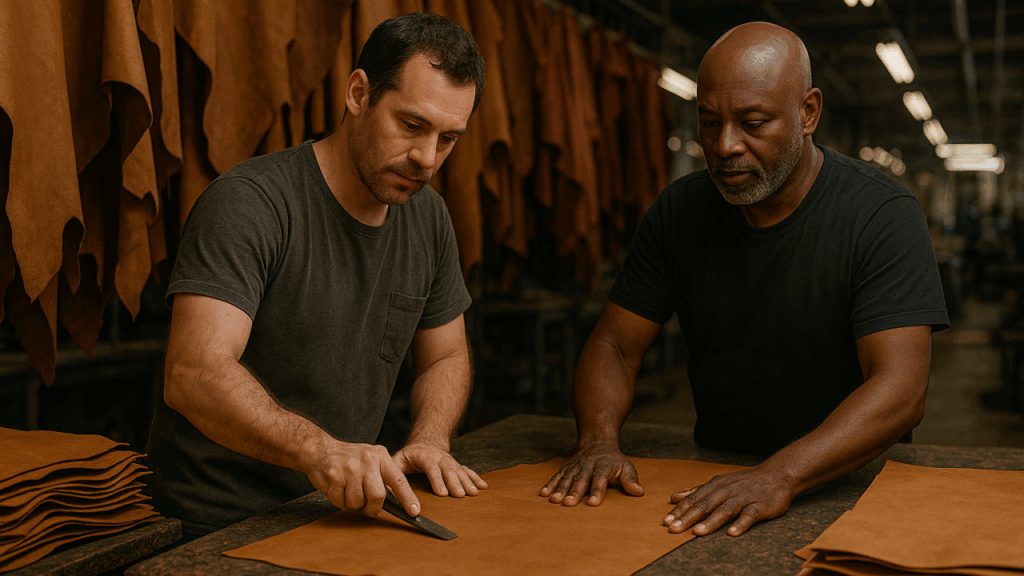
These judgments aren’t random. They come from experience, from memory, and from context — often gathered through the body, not the brain: what something smells like, or how it feels in your hands. The way a room changes when a new idea lands.
Even that kind of knowing — the one that feels instinctive — is often shaped by others. Someone’s hesitation. A question you didn’t expect. The way a conversation doesn’t move forward until something gets clearer. It’s not always about inspiration. Sometimes it’s just the pressure of having to explain what you meant — and realising you haven’t quite worked it out yet.
AI can simulate conversation. It can mimic tone. But it can’t sit with you in the discomfort. It can’t offer resistance — or make you trust your instincts. It can’t respond to a shift in the room, or the feeling that something important just got said.
We talk a lot about creativity as if it’s something personal, individual. But often it isn’t. It happens in interaction.
And AI, no matter how responsive, is always just on the other side of a screen.
The Part We Can’t Skip
There’s a part of the creative process that doesn’t get talked about much — mostly because it’s the part people would rather avoid. The stretch of time where something doesn’t quite work yet, and you’re not sure why. The version you thought was solid until someone asks a question you can’t answer. The sense that you’re circling around something real, but you haven’t found it yet. It’s uncomfortable. Sometimes frustrating. But it’s where judgment is formed. And more often than not, it’s where the work actually takes shape.
What tools like AI risk doing isn’t replacing that process — it’s bypassing it. It gives you something polished quickly, and makes it easy to move on. But when the messy part disappears, so does the time you needed to figure out what the work was really trying to say. And without that, it becomes easier to produce — but harder to see what actually matters.
That’s what I keep noticing. Now that anyone can generate anything in seconds, it’s becoming harder to hide when that thing has no real reason to exist. When the idea isn’t anchored in anything, when there’s no point of view. The tools haven’t stripped away creativity — they’ve just made the absence of it easier to spot.
It’s no longer about what you’re able to produce. It’s about what still feels necessary to make even when the shortcuts are right there.
The value isn’t in what you can create, it’s in why you create it at all.