In looking for benchmarks across the sustainable fibre to fashion value chain for one of our programs, we started to notice something interesting:
There are quite a few case studies notably from Europe showcasing supposedly cutting-edge solutions like “smart fashion”, “wearable tech”, “sensor-driven fabrics” and “circular traceability systems”. When stripping these solutions down to their core though, they start to look very much like what we know local entrepreneurs here in Kenya and (East) Africa are working on as well.
Often though with less funding, fewer resources, and more constraints. But they’re doing it. Solving real problems with real solutions.
And yet, when these innovations are built here, they don’t seem to be met with the same response. They’re not picked up as global success stories. They don’t attract the same type of investment. They’re not described with the same language.
Which made me think: if the innovations are similar, why are the outcomes in terms of visibility, legitimacy, and support so different?
—
Take something as specific as a heated jacket.
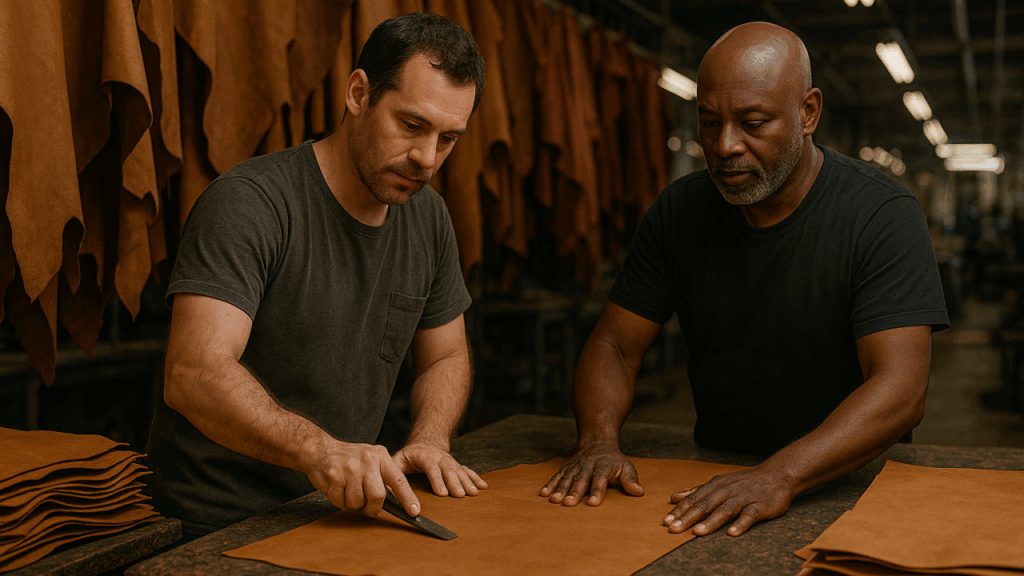
I worked with a Kenyan entrepreneur who created this — not in theory or as a concept, but as a real product. It was designed for professionals being exposed to working in the cold, like boda riders and night guards. He embedded heating wires inside the fabric and powered them with small battery packs, then tested it in the field. No big promises, just something useful that worked.
Now imagine the exact same product brought to market by a startup based in EU.
Chances are, it would be described as “smart textiles” or “wearable thermal regulation”. It might be pitched as a breakthrough in climate-adaptive fashion or linked to the future of embedded computing in clothing. It would have sleek branding including a launch video with someone explaining how it’s going to revolutionise the future of workwear.
The same basic innovation, with the same intention, but a completely different narrative…
And that narrative — how the product is framed, where it comes from, and who is telling the story — seems to make all the difference.
Because while the Kenyan version is solving a real problem on the ground, the EU version is seen as innovative. It taps into what people have been taught to see as “the future.” And that tends to shape who gets the funding, the visibility, and the partnerships — even when the innovation itself is nearly identical.
And when that kind of framing is what gets funded and celebrated, it doesn’t just affect visibility, it starts to shape behaviour: over time, entrepreneurs begin to adjust to fit the narrative. Not because their innovation isn’t strong, but because they no longer believe it will be recognised unless it mimics success.
—
That’s a pattern I realise I am seeing again and again.
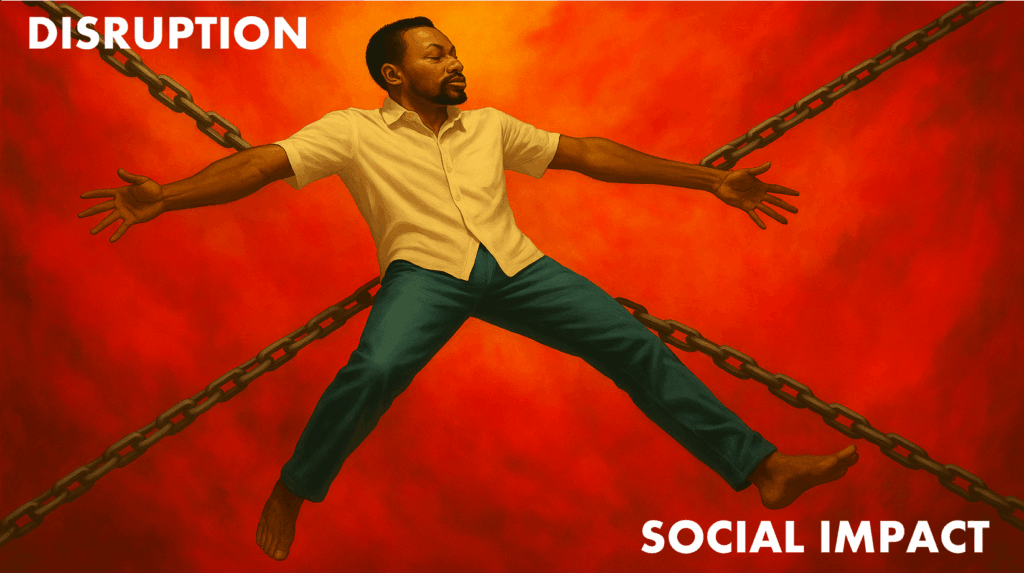
It’s not that Kenyan or African innovations are missing. Most entrepreneurs I know that I see doing great things don’t seem to fit the frame of what innovation in Kenya or Africa is supposed to look like according to investors and eco-system builders: they need either a bold, disruptive idea that sounds like Silicon Valley; or a small, social project that ticks all the boxes for impact at community level.
There’s no space for what I like to call the real world which sits in the middle.
And what’s strange is that most of us can see the value in developing practical solutions for the real world. We’d rather buy the heated jacket that works than one that just sounds flashy and we prefer to trust the person who built something for real users than someone who’s still pitching a concept.
But when it comes to how decisions are made — about funding, partnerships, visibility — the flashy story tends to win. If an innovation is practical, smart, and ambitious but in a quiet way it’s not seen as “innovative” enough to get global attention and it’s not “local” enough to be framed as grassroots.
I don’t think it’s because decision makers prefer the flashy version. I think it goes deeper than that. The eco-system is caught in a loop — where everyone behaves as if the Silicon Valley-style framing is the right one, not because they fully believe in it, but because they think everyone else does?
Founders notice what gets attention and so they adjust. They learn the tricks and start pitching what they think the other side wants to hear — not what they actually believe in. Not out of malice or because they’re trying to manipulate anything, but because they’re trying to be taken seriously.
What I have seen happening is that after a while, it isn’t only the language that changes.
We see it in the submissions we get for our own programs. Founders apply with the same two templates over and over again: the disruptive innovation pitch that is not grounded in any reality, or the women-led, employment creating do-good proposal which makes no commercial sense — regardless of what we’re actually asking for in the call.
I personally don’t think it’s because the founders who submit don’t have better ideas, but because they no longer think that those ideas will be seen. So they no longer create for what is truly needed, but for what they think is fundable.
—
This doesn’t mean storytelling shouldn’t matter, it should.
But I feel we’ve ended up with a false choice: the way you frame your innovation influences who takes you seriously, how you get funded, and whether people see the value in what you’re doing. Either you keep things practical and focused on the work — and risk being dismissed as small or unscalable. Or you use the language of disruption — and end up sounding like something you’re not.
It’s not just a communication issue. It’s a trade-off that shouldn’t exist in the first place as it forces people to choose between being real and having to fake it, and between local appreciation and global recognition.
Because if a certain type of story keeps being rewarded, we’ll keep getting the same type of applications — even if they have nothing to do with the real opportunities.